Short answer: in Portugal, every employer must provide occupational health and safety services for its staff under Law 102/2009 of 10 September. That covers occupational medicine (pre-employment, periodic and occasional health checks), workplace safety and risk assessment, and training. Most companies with 100 to 400 employees meet this duty through an authorised external provider. International companies usually look for one provider that covers all their sites in Portugal and reports in English.
This guide is for HR, EHS and operations leaders, in Portugal or at a group headquarters abroad, who need to set up or review occupational health for a Portuguese operation.
What does occupational health include in Portugal?
| Area | What it covers | Mandatory? |
|---|---|---|
| Occupational medicine | Pre-employment, periodic and occasional health checks; fitness-for-work certificate (ficha de aptidão) | Yes |
| Workplace safety | Risk assessment, site visits, prevention measures, emergency plan | Yes |
| Psychosocial risks | Stress, workload, work organisation, burnout | Part of the risk assessment |
| Training and information | Health and safety, first aid, emergency and evacuation | Yes |
| Environmental monitoring | Noise, lighting, thermal comfort, air quality, chemical agents | When there is exposure |
| Corporate wellbeing | Physiotherapy, nutrition, psychology, workplace exercise | No, but recommended |
What does Portuguese law require from employers?
- Organise health and safety services through one of three models: internal, shared (common) or external service.
- Have an internal service when the company has at least 400 workers at one site (or at sites within 50 km of the largest one), or at least 30 workers exposed to high-risk activities, unless an exemption is granted.
- Run health checks: before or shortly after hiring, periodically (every year for minors and workers over 50, every two years for everyone else) and occasionally, for example after a long sick leave.
- Assess the risks of every job and apply prevention measures.
- Inform, consult and train workers on health and safety.
- Report the activity of the health and safety services in the annual Single Report (Relatório Único, Annex D).
- Pay all costs: occupational health costs can never be charged to employees.
For the medical side in detail, read our complete guide to occupational medicine in Portugal.
Internal or external service?
Below the internal-service thresholds, most large employers use an authorised external provider. The Directorate-General of Health (DGS) authorises providers of occupational health and the Working Conditions Authority (ACT) authorises providers of workplace safety. You can check both registers before signing.
How international companies run occupational health across several sites
- One contract and one account manager for every site in Portugal, instead of a different provider per city.
- A health-check calendar per site, planned in advance to keep every worker within the legal deadlines.
- On-site appointments when headcount justifies it, so employees spend less time away from work.
- Consolidated reporting by site: health checks up to date, restricted fitness, accidents and absence.
- Reports and communication in English for group HR and EHS teams. Confirm this with the provider before you sign.
- Safety and training linked to medicine, so medical restrictions reach line managers and workstations.
Common pitfalls for foreign employers
- Assuming the home-country health check is valid in Portugal. It is not: workers need a Portuguese fitness-for-work certificate.
- Forgetting occasional exams after long absences or job changes.
- Treating remote and hybrid workers as out of scope. Their workstations also need risk assessment.
- Choosing a provider that cannot cover every site, which leaves gaps in compliance.
Occupational health with SEPRI
SEPRI is a Portuguese occupational health group founded in 1991. It serves more than 1,300 client companies and around 150,000 people. SEPRI provides integrated health and safety at work services: occupational medicine, workplace safety, food safety (HACCP), construction site safety, certified training, psychosocial risk assessment and corporate wellbeing programmes.
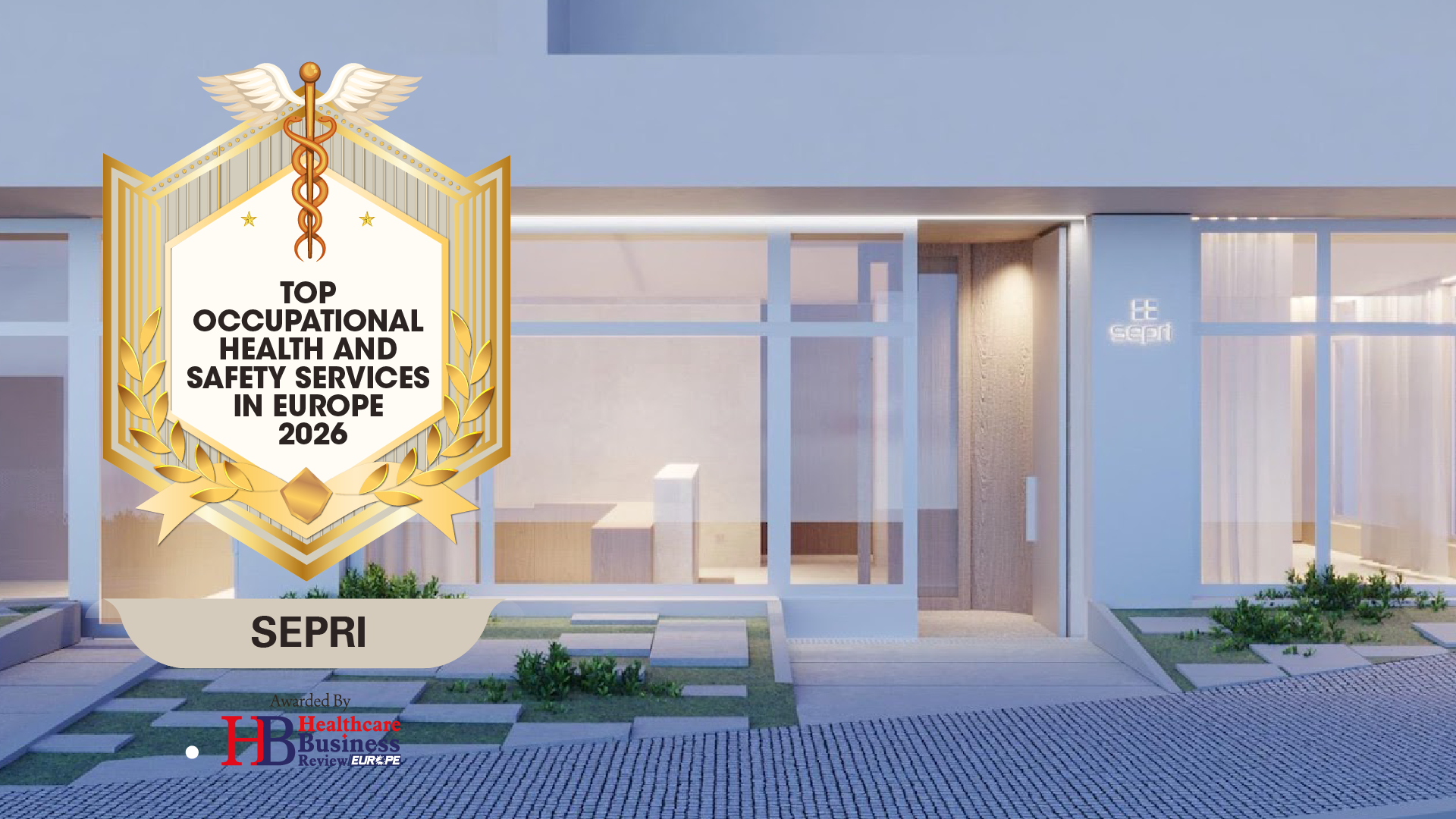
We work nationwide, at client premises or at our clinics in Braga and Lisbon, and we already support multinational companies operating in Portugal. In 2026, SEPRI was recognised by Healthcare Business Review Europe among the leading occupational health and safety providers in Europe. The group also operates in Angola and Mozambique.
Setting up or reviewing occupational health in Portugal? Request a proposal with your headcount, sector and locations.
Frequently asked questions
Is occupational health mandatory in Portugal?
Yes. Every employer with employees must organise occupational health and safety services under Law 102/2009 of 10 September.
How often do employees need health checks in Portugal?
Every two years as a rule, and every year for minors and workers over 50. There are also pre-employment checks and occasional checks, for example after a long sick leave.
Can a foreign company use an external occupational health provider in Portugal?
Yes. Companies below the internal-service thresholds can use an external provider authorised by the DGS (health) and the ACT (safety).
Who enforces occupational health and safety in Portugal?
The Working Conditions Authority (ACT) enforces employer obligations. The Directorate-General of Health (DGS) authorises and oversees external occupational health services.
Does SEPRI cover Lisbon, Porto and the rest of Portugal?
Yes. SEPRI works nationwide, at client premises or at its clinics in Braga and Lisbon.
Last reviewed: November 2026. This article is for information only and does not replace the applicable legislation.